
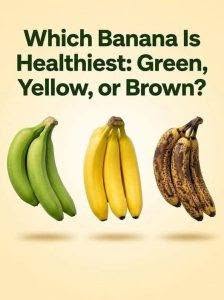
Which Banana Is Healthiest: Green, Yellow, or Brown? Discover the Differences
4. Which Banana Has the Most Sugar?
One of the biggest differences between bananas at different stages of ripeness is their carbohydrate composition.
Green bananas contain more resistant starch, while ripe bananas contain more simple sugars because some of the starch has been converted during ripening.
This does not mean that ripe bananas are unhealthy.
The total carbohydrate content does not necessarily increase dramatically during ripening; rather, the types of carbohydrates change.
People monitoring their blood glucose may find that less-ripe bananas produce a different response from very ripe bananas. Individual responses vary depending on portion size, the rest of the meal, and personal metabolism.
5. Which Banana Is Best for Digestion?
The answer depends on individual digestive needs.
Green bananas contain resistant starch, which can be fermented by intestinal bacteria and may support gut health.
Yellow bananas provide a combination of fiber and easily digestible carbohydrates.
Very ripe bananas are softer and may be easier for some people to chew and tolerate.
However, everyone’s digestive system is different. People with sensitive digestion may react differently to the various ripeness stages.
There is no single banana color that is best for everyone.
