
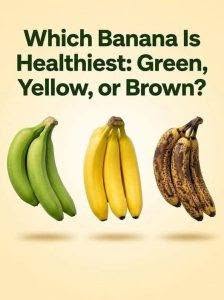
Which Banana Is Healthiest: Green, Yellow, or Brown? Discover the Differences
Bananas are among the most popular fruits in the world. They are affordable, convenient, naturally sweet, and packed with important nutrients. But have you ever wondered whether a green banana is healthier than a yellow one? Or whether those brown spots mean a banana has become even more nutritious?
The truth is that bananas change significantly as they ripen. Their color tells us something about their texture, sweetness, starch content, and how the body processes their carbohydrates.
Green, yellow, and brown bananas all offer nutritional benefits, but each stage has its own characteristics.
Let’s explore the differences and discover which banana might be the best choice for your everyday diet.
1. Green Bananas: A Source of Resistant Starch
Green bananas are not fully ripe. They are firmer, less sweet, and contain more resistant starch than ripe bananas.
Resistant starch is a type of carbohydrate that is not completely digested in the small intestine. Instead, some of it reaches the large intestine, where beneficial gut bacteria can ferment it.
Potential benefits include:
- Supporting digestive health.
- Providing food for beneficial gut bacteria.
- Helping promote a feeling of fullness.
- Producing a slower rise in blood glucose compared with some more easily digested carbohydrates.
Green bananas are particularly useful in cooking. They can be boiled, steamed, or added to savory dishes.
However, some people may experience bloating or gas when eating large amounts of resistant starch.
Best for: People who enjoy less-sweet foods and want to include more resistant starch in their diet.
