
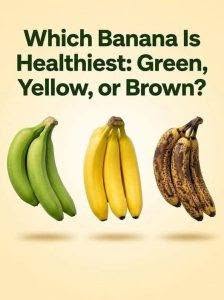
Which Banana Is Healthiest: Green, Yellow, or Brown? Discover the Differences
2. Yellow Bananas: A Balanced Everyday Choice
Yellow bananas are fully ripe or close to full ripeness. They are softer, sweeter, and easier to eat than green bananas.
As bananas ripen, some of their starch is converted into natural sugars, including glucose, fructose, and sucrose.
Yellow bananas provide several important nutrients:
- Potassium: Helps support normal muscle and nerve function.
- Vitamin B6: Plays a role in brain development and normal metabolism.
- Vitamin C: Supports normal immune function and protects cells from oxidative stress.
- Fiber: Helps maintain digestive regularity.
Their convenient texture and naturally sweet flavor make them a popular snack.
They can also be added to oatmeal, smoothies, yogurt, or whole-grain breakfast dishes.
Best for: Everyday snacking and a convenient source of carbohydrates, vitamins, and minerals.
3. Brown Bananas: Sweeter and Softer
When bananas develop brown spots or become mostly brown, they are generally more advanced in the ripening process.
During ripening, starch continues to break down into simpler sugars. This explains why brown bananas often taste much sweeter than green ones.
Their soft texture makes them especially useful in cooking.
You can use ripe bananas to prepare:
- Homemade banana bread.
- Smoothies.
- Banana pancakes.
- Natural fruit purées.
- Oatmeal and baking recipes.
Brown bananas still contain useful nutrients, including potassium and vitamin B6. However, their nutritional composition changes as they ripen.
It is important to distinguish between naturally spotted bananas and spoiled fruit. Bananas with mold, leaking liquid, or an unpleasant smell should be discarded.
Best for: Baking, smoothies, and people who prefer naturally sweeter fruit.
