
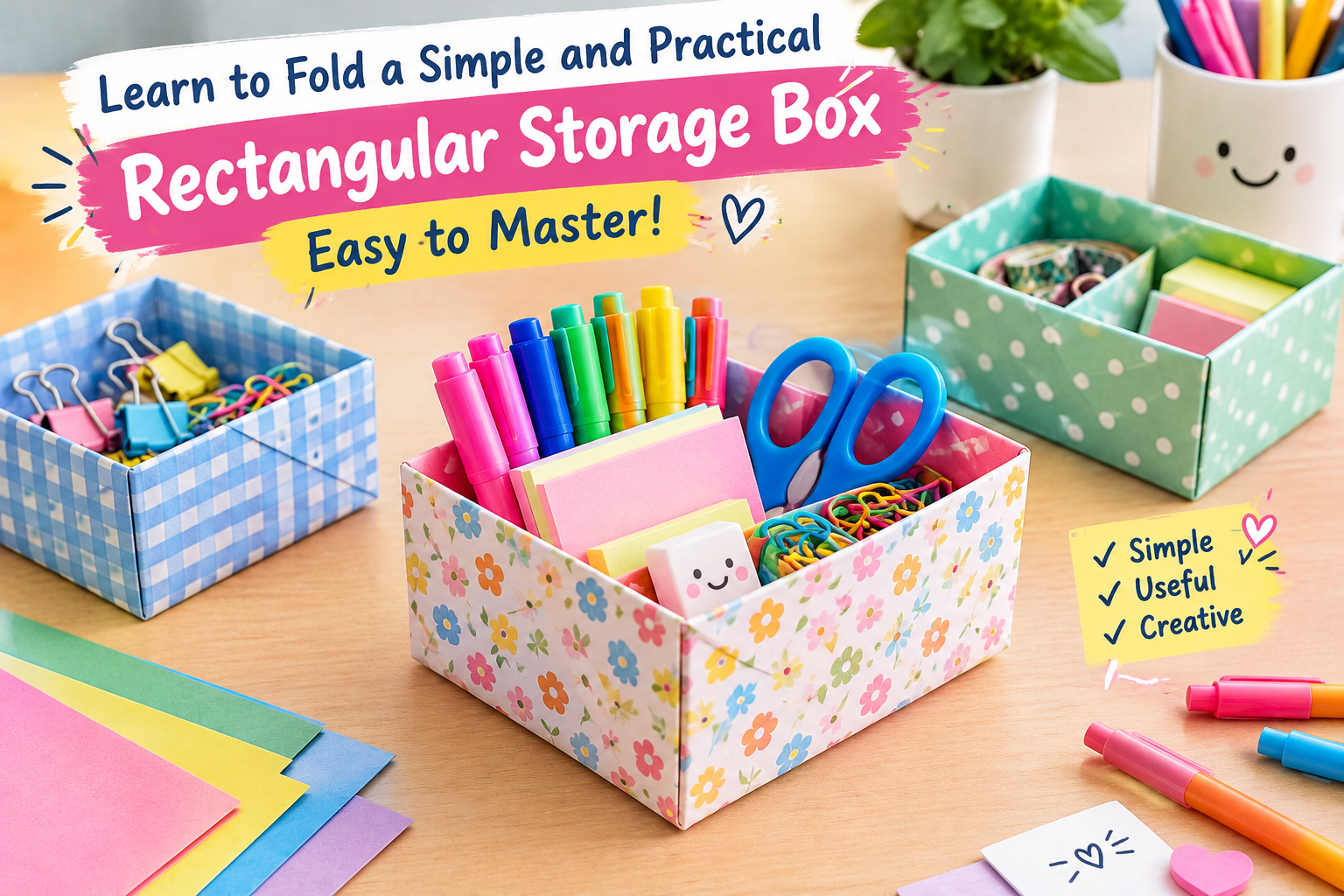
Learn to Fold a Simple and Practical Rectangular Storage Box – Easy to Master!
Step 6: Secure and Adjust the Base
Press the bottom folds flat and check that the corners are neatly aligned. If your chosen design uses locking flaps, make sure they are tucked securely into position.
Traditional origami boxes generally rely on folds rather than glue. For a simple paper organizer, a small piece of tape can be used if extra support is needed.
Step 7: Decorate Your Finished Box
Once the box holds its shape, add stickers, drawings, labels, or colorful patterns.
You can create matching boxes for different supplies or use contrasting colors to make each container easy to identify.
Your handmade rectangular storage box is ready to use!
Creative Ways to Use Your Rectangular Paper Box
Once you have mastered the basic folding technique, you’ll find many ways to use your new container.
1. Organize Your Desk
Keep paper clips, erasers, rubber bands, sticky notes, and other small stationery items together. Several small boxes can help separate your supplies.
2. Store Craft Materials
Use your box to organize buttons, beads, stickers, paper shapes, and other lightweight crafting materials.
3. Create a Gift Box
Decorate the outside with patterned paper or handmade drawings to create a personal container for a small gift.
For a more finished look, make a matching lid using a compatible box design.
4. Keep Small Accessories Together
A paper box can hold hair clips, lightweight jewelry, or other small accessories. Keep it dry and avoid using it for valuable items that require secure storage.
5. Organize a Drawer
Make multiple boxes in different sizes to divide a drawer into smaller sections. This is a simple way to keep little objects from becoming mixed together.
Tips for a Neater and Stronger Box
A few small adjustments can make a big difference in the finished result.
- Use suitable paper: Medium-weight paper is often a good balance between flexibility and strength.
- Make precise folds: Align the edges before pressing each crease.
- Choose the right dimensions: A rectangular sheet produces different proportions depending on the folding pattern.
- Reinforce the bottom: A thin piece of cardboard can provide extra support.
- Avoid heavy objects: Paper boxes are best for lightweight items.
- Keep the box dry: Moisture can soften the paper and damage its shape.
If you’re making this craft with children, prepare the paper in advance and let them focus on folding and decorating.